Ollantaytambo: Routes, activities and curiosities

Ollantaytambo is full of history, mystical energy and great tourist attractions. It is a mixture of customs, traditional life and modernity. It offers a lot of options for travelers and without a doubt the scenery is simply splendid.
Are you looking for new destinations to visit during your trip to Cusco? Meet Ollantaytambo with us, leave everything in our hands and enjoy an experience that will remain engraved in your memory forever.
What is Ollantaytambo?
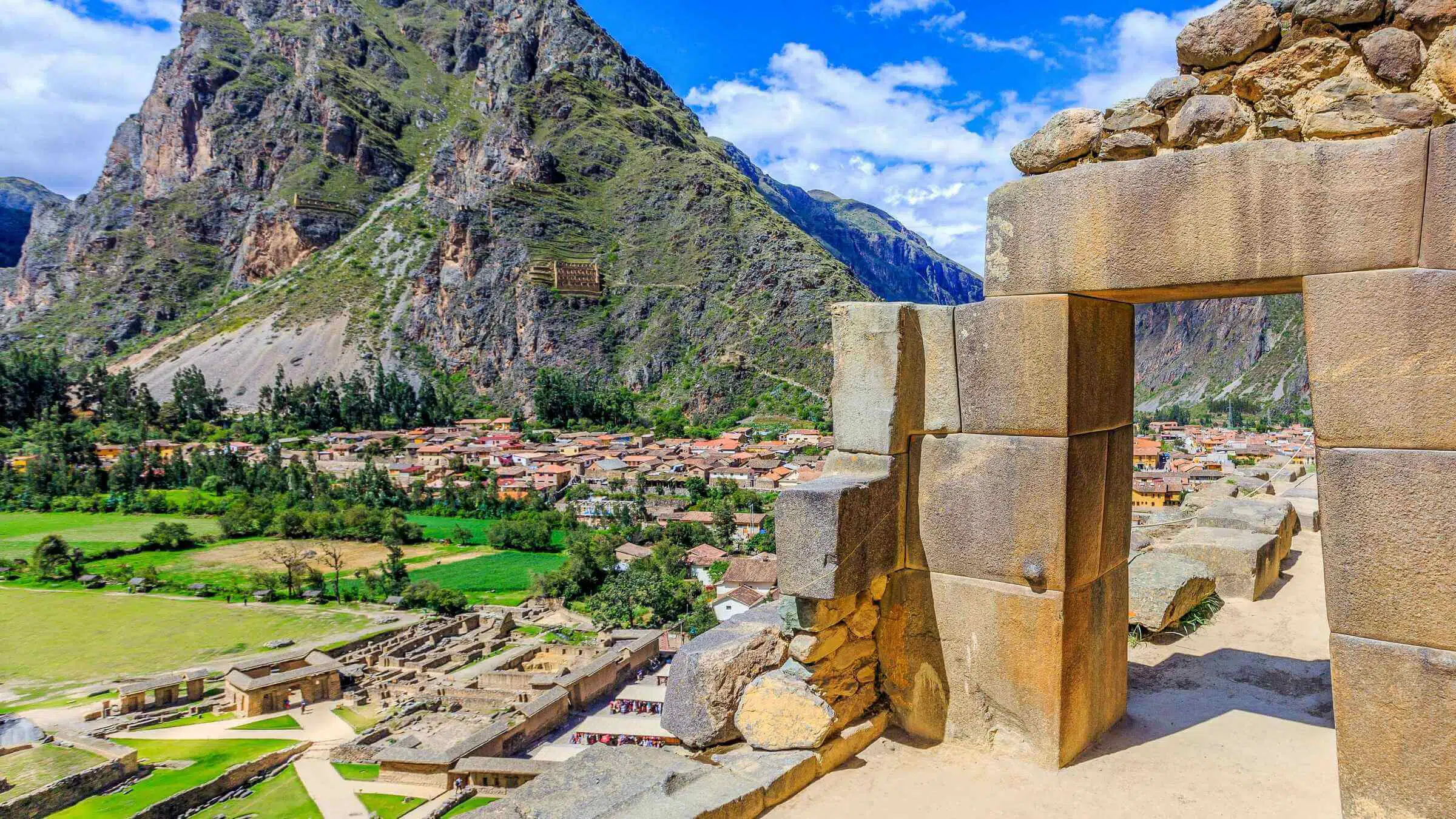
Ollantaytambo is a town in the Sacred Valley of the Incas, next to the Urubamba or Vilcanota River, surrounded by mountains and covered by a generous sky full of light during the day and bright stars at night.
It is known for its ruins, a large Inca construction with stone terraces on a hillside. The archaeological complex is full of beautiful places rich in history and the historical center is a fusion of beautiful Inca and colonial constructions.
Get to know all its history and beauty with us by joining us: Peru Adventure Trek, private tour of Ollantaytambo

Where is Ollantaytambo?
Ollantaytambo is one of the seven districts in the province of Urubamba, located in the department of Cusco in southeastern Peru. The town is in the middle of the Sacred Valley of the Incas, 72 kilometers northeast of the city of Cusco, between Urubamba and Machu Picchu on the route of the Urubamba River, and is a part of our country of extraordinary agricultural wealth and unparalleled beauty that will leave you breathless.
How to get from Cusco to Ollantaytambo?
The safest option is to take our Bimodal service, which consists of the transfer from Cusco to Ollantaytambo in a private bus and then continue the trip in one of our trains to Machu Picchu.
You can also make the trip by car or bus along the Sacred Valley road, leaving Cusco towards Pisac, passing through Coya, Lamay, Calca, Yucay, Urubamba and finally Ollantaytambo. This route is longer, taking about three and a half hours, so make sure you have enough time to do it without problems.
This is the best time to see it all, so you might be interested in our packages. Enjoy the Sacred Valley of the Incas with us: Peru Adventure Trek, one day tour to Chinchero, Ollantaytambo, Maras and Moray.
Train from Ollantaytambo to Machu Picchu
To get to Machu Picchu from Ollantaytambo, you must go to the train station at Av. Ferrocarril s/n, in Ollantaytambo. There you will board our trains, which will take you to Machu Picchu Pueblo station, where you can take the Consettur Bus that will drop you off at the Citadel.
You can also get your entrance to Machu Picchu with a certified guide in the Inca Rail All Inclusive. Click here to get it, just select your travel dates and the number of people that will accompany you.
The trip from Ollantaytambo to Machu Picchu on our trains is simply a delightful experience for your senses. The scenery is everything you expect and more, our cars are spacious and comfortable and you can enjoy good music while traveling without worries, because we follow a strict biosecurity protocol in all our trains.
How high is the town of Ollantaytambo?
Ollantaytambo is located at 2792 meters above sea level (masl), a lower altitude than the imperial city of Cusco which is located at 3399 (masl). This makes Ollantaytambo the perfect place to spend the first days of your trip and acclimatize before starting all the activities, walks and experiences you want to live.
It is important to remember that it is advisable to go slowly the first days of the trip to avoid altitude sickness or soroche.
Where does the name Ollantaytambo come from?
It comes from the Quechua word “Ullantawi” which means “Place to look down”. It is thought that it dates back to the late eighteenth century and has its origin in a drama staged at that time with Inca plot and whose protagonist was General Ollantay.
The place where the story takes place, according to literary evidence, was the tambo below Yucay. During the time of the Inca Empire, a tambo was a sort of temporary lodging, an enclosure located next to an important road used by those who belonged to the state. The tambo served as a shelter and as a collection center for administrative and military purposes. The tambos were very important buildings during the time of the Empire and their presence was abundant and very significant.
The combination of Ollantay and Tambo results in the name Ollantaytambo. This explanation given by some chroniclers, such as the historian Victor Angeles, is not necessarily the most accurate, as the name is recorded in older documents, such as the writings of the Inca Garcilaso de la Vega.
A little history about Ollantaytambo
During the time of the Spanish conquest, the town of Ollantaytambo was a temporary capital for Manco Inca Yupanqui, who led the resistance against the invaders. It was his vision to fortify the town of Ollantaytambo and its surroundings around the direction leading to the city of Cusco, which at that time was already under the rule of the colonizers.
In spite of having won important battles, Manco Inca did not think it was safe to remain in Ollantaytambo and went into the thick forest of Vilcabamba, today one of the fifteen districts of the province of La Convención, in the department of Cusco.
In 1540, the town of Ollantaytambo was assigned as an encomienda to Hernando Pizarro, brother of Francisco Pizzarro and one of the Spaniards in charge of conquering Inca territory.
The encomienda was a type of Spanish labor system that benefited the conquerors with the work of some groups of native people, who did not know the Christian religion. The workers were to receive rewards from the Spaniards for their work, but this part of the deal was not fully complied with, since the Catholic religion was the main benefit.
What to do in Ollantaytambo?
Visit the Ollantaytambo Ruins
The archaeological complex of Ollantaytambo is to this day, a construction of imposing presence that was a military, religious and agricultural center during the time of the Inca Empire. This great architectural site is very remarkable for its dimensions and the great amount of details in its construction.
Ollantaytambo dates back to the time of the Inca Pachacutec, along with the construction of the marvelous citadel of Machu Picchu, during the height of the Inca Empire. Thanks to its location, Ollantaytambo was a strategic place in the fight against the Spanish invaders and even today looks spectacular for its stone terraces and its large and indestructible walls of more than 4 meters high. The construction is impressive and is wrapped in a mantle of magic and mystery.
This fabulous building was built with rocks from a nearby quarry located about 6 kilometers away. It is said that to transport all that material, an extraordinary engineering work was done, diverting the river water with canals around it.
Ollantaytambo is full of architectural jewels such as fountains, temples and terraces, a true wonder of ancient Peru.
Tour the Temple of the Sun
The Andean cosmovision contemplates the Sun as the creator god and father of the Andean world. For this reason in Ollantaytambo, as in almost all archaeological sites of ancient Peru, a temple dedicated to the creator God, the Sun, was built.
This temple has 150 steps perfectly carved in stone. It is made of granite and it can be seen very clearly a wall of six monoliths erected and joined by sheets of stones that fulfilled an anti-seismic function. This construction passed through the hands of several architects, so it was never completed as it was originally intended.
Some of the stones of the Temple of the Sun weigh more than four tons, so it is thought that many of the large stones found on the road are those that did not reach their destination and are known as “tired stones”.
To move these huge boulders, a system of canals was designed to divert the river water to cross these huge stones. It took rollers and rolling stones, leather ropes, the strength of thousands of men and also animals to achieve it, a titanic task that lasts through time and is still marvelous today.
To know the Fuente de la Ñusta

The ancient inhabitants of Peru chose this part of the Sacred Valley for the construction of Ollantaytambo, not only for its beauty and fertile land, but also for the subway channels they discovered in this area. They designed an impeccably made aqueduct system that is still in use today. One of the samples of their engineering knowledge is the Fuente de la Ñusta or the Baño de la Ñusta, considered one of the most beautiful fountains made by the Incas. It is made of a single stone and decorated in the shape of a portal.
This fountain was used for the Inca’s wife to take purifying baths. A detail worth mentioning is that when one places a finger where the fresh and clean water makes its journey, the flow of water stops.
Strolling through the town of Ollantaytambo
Ollantaytambo is known as a living Inca city, because the community keeps alive and in force many of its ancestral customs. Although the main tourist attraction is the archaeological site, the town of Ollantaytambo has a lot of history, colors and life.
It is said that Ollantaytambo was built by the Inca Pachacutec (1438- 1471) in the middle of the 15th century. Today the town combines stone streets, Inca buildings and colonial plazas in perfect harmony, while incorporating modern elements that allow travelers to find everything they need to stay in Ollantaytambo.
Ollantaytambo is on the route to Machu Picchu, so you can definitely make a stop in the village to get to know it and visit the archaeological site.
Once you get to the town of Ollantaytambo, you will discover that there are many things you can do and places you can visit, such as:
Tour the Plaza de Armas.
As soon as you arrive in town you should visit the Main Square of Ollantaytambo, where you will find all the tourist services you need. You will also find the train station to Machu Picchu very close to the Plaza, so you can’t miss it. If you are in the mood to investigate and fill yourself with history, you can also visit the Church of Santiago Apostle.
Visit the Catcco Museum
Catcco stands for Centro Andino por la Tecnología y Cultura de las Comunidades de Ollantaytambo (Andean Center for Technology and Culture of the Ollantaytambo Communities). The Catcco Museum is a cultural center that exhibits handicrafts produced by the people of Ollantaytambo, offers information to visitors about tourist activities and sites, has a conference room and includes an educational exhibition on the origins of Ollantaytambo.
Go to Pinkuylluna Archaeological Site

Pinkuylluna is an archaeological site where there were large food stores located in the upper part of the mountain. They were used for storing corn, potatoes, coca, etc.
These warehouses are located at high altitude to ensure better preservation of the products due to the low temperatures of the higher areas of the Peruvian Andes.
From above you can see the entire town of Ollantaytambo and from below, the archaeological remains are perfectly recognizable, however Pinkuylluna is one of the least known places within the tourist circuit during the trip to Cusco.
Venture to Perolniyoc Waterfalls
The Perolniyoc Waterfalls are a natural attraction of great beauty, perfect for adventure sports. They are located on the outskirts of the town of Ollantaytambo, a 30 minute walk from the town of Socma.
These waterfalls have a waterfall of about 100 meters high. If you are looking for adventure and nature, this is an experience not to be missed.
Enjoy the Yanacocha Lagoon
Yanacocha is located just 26 kilometers from Ollantaytambo in the town of Huayabamba, and is a very popular tourist attraction among the communities and towns near Ollantaytambo.
Yanacocha means “Black Lagoon” and is named after the color of its waters.
Camping and hiking are common in this area, while enjoying the breathtaking scenery surrounded by mountains. If you decide to visit the lagoon, take into account that you will have to hike for about 4 hours to get there.
Experience tourism in Ollantaytambo

Experiential tourism is one of the many reasons to visit destinations such as Cusco, as it allows travelers to experience, even if only for a short time, what life is like in a certain place.
Experiential tourism starts the local economy of towns and communities, helps to empower the most vulnerable groups and contributes to generate socioeconomic development in the communities that participate in this type of tourism.
In Ollantaytambo, the community of Willoq offers experiences related to their customs, such as cultivating the land and weaving with ancestral techniques. Willoq is located 45 minutes from Ollantaytambo by car and opened its doors to tourism in 1992.
Experiential tourism is of great benefit, as it allows communities to grow economically and socially, transmit their knowledge and sustain their customs even in this time of modernity and digitalization, while allowing the traveler to soak up the magic of a life that goes at a leisurely pace, among trees, river and stars. Experiential tourism goes in the heart of each traveler and not only in the souvenirs they take home with them.
Travel the Inca Trail
Ollantaytambo is on the route that leads to Machu Picchu, where you can arrive by train or by the Inca Trail, a very ancient route built under the command of the Inca Pachacutec with the intention of connecting the city of Cusco with the citadel of Machu Picchu.
Along the way there are still a lot of Inca constructions that are part of the landscape and enhance the experience.
This trek lasts 4 days, with a total distance of almost 40 kilometers, making it very physically demanding. Along the way you will see Inca archaeological sites such as Patallacta, Q’ente, Wiñaywayna where the scenery is indescribable. You will arrive at Machu Picchu on the morning of the fourth day and all your effort will have been worth it.
Visit the Ollantaytambo market.

As in almost every town around Cusco, in Ollantaytambo you will find a market of handicrafts and local products. Stroll among its stalls and colors and you are sure to find many souvenirs beautifully made by artisans from the community.
You may read in many travel blogs that bargaining is what you are expected to do when you go to buy a handicraft product, but before you do think about the work it takes for the artisans to create each of the pieces they sell. Recognize their work and pay the right price.
Where to stay in Ollantaytambo?
As in almost all tourist destinations in Cusco, Ollantaytambo offers several lodging options for travelers. Hotels, backpackers, hostels, boutique house or AirBnB, the possibilities are many and it just depends on what you are looking for as a travel experience.
Where to eat?
Eating in Peru is a pleasure no matter where you do it and Ollantaytambo is no exception. You are going to find a variety of places, prices, dishes, small cafes like La Esquina Café, a place to eat a dessert or have breakfast, have a sandwich with a hot drink or whatever you feel like.
If you are looking for something more elaborate, El Albergue has delicious dishes and very powerful and rich cocktails. But if you’re in the mood for something more traditional, Ollantaytambo Market has all those traditional Cusco flavors.
Ollantaytambo awaits you with an open heart and open arms, ready to share its history, its customs, its beauty and all its magic.
Dare to explore Ollantaytambo and the surrounding villages, enter Peru Adventure Trek, tour Ollantaytambo, Maras and Moray, and let us take care of everything while you enjoy the experience of the Andean world.
Travel without mishaps, travel safely with Peru Adventure Trek.
MOST POPULAR TOURS IN CUSCO
- City Tour Cusco
- Valle Sagrado de los Incas Clasico
- Super Valle Sagrado Vip
- Tour Laguna Humantay
- Tour Montaña de Colores
- Tour 7 Lagunas Ausangate
MACHU PICCHU TOURS TOURS
- Machu Picchu Full Day
- Machu Picchu 2 dias
- Valle Sagrado machu Picchu 2 Dias
- Super valle Sagrado Vip machu picchu 2 Dias